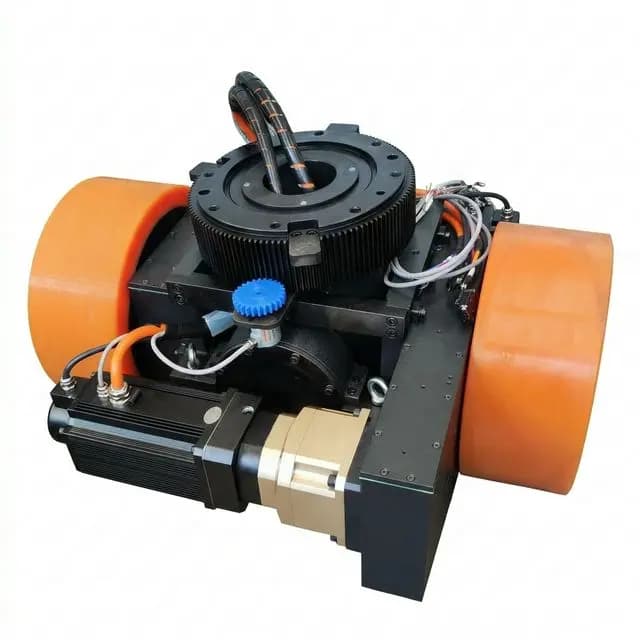

Polyurethane Delamination in 24/7 AGV Drive Wheels: Causes and Procurement Solutions
A deep dive into why AGV drive wheels fail from thermal hysteresis and delamination in continuous operations, and how procurement and engineering teams can solve it.
The Short Answer for OEM Buyers: Polyurethane delamination in 24/7 Automated Guided Vehicles (AGVs) is primarily driven by internal heat build-up (thermal hysteresis) and inadequate metal-core surface preparation. To eliminate this failure mode, engineering and procurement teams must specify high-dynamic-load materials (like NDI-based Vulkollan®), audit the supplier's grit-blasting and primer application processes, and right-size the wheel for continuous thermal loads rather than static peak loads.
In the shift from single-shift operations to 24/7 "lights-out" warehouse automation, the physical demands placed on AGV drive wheels have escalated exponentially. A drive wheel that performs flawlessly for 8 hours a day may suffer catastrophic failure within weeks when pushed to continuous duty. The most common, disruptive, and expensive of these failures is polyurethane delamination—the separation of the elastomeric tread from the rigid metal core.
For procurement teams, importers, and engineers, understanding the root causes of delamination is critical. Unplanned line stoppages in high-speed fulfillment centers can incur massive downtime costs, and frequent wheel replacements destroy the Total Cost of Ownership (TCO) models used to justify automation investments.
This guide provides a deep technical and procurement-focused breakdown of why AGV drive wheels delaminate, how to distinguish between thermal and adhesive failures, and the exact specifications you must include in your next RFQ to prevent it.
1. Mechanical vs. Thermal Failure: Understanding the Physics
When a polyurethane AGV wheel fails, it generally happens through one of two mechanisms: cohesive failure (the material itself tears or melts) or adhesive failure (the bond between the polyurethane and the metal core breaks). Delamination is technically an adhesive failure, but it is frequently triggered by thermal breakdown.
The Role of Thermal Hysteresis
Polyurethane is a viscoelastic material. When it rolls under a load, it compresses at the contact patch and then recovers its shape as it rolls away. Because the material is not perfectly elastic, a small amount of the energy used to compress it is lost as internal heat. This phenomenon is known as thermal hysteresis.
In a 24/7 continuous operation, the wheel does not get adequate time to cool down between compression cycles. Furthermore, polyurethane is an excellent thermal insulator. As the internal temperature rises, the heat becomes trapped near the metal core interface.
If the internal temperature of standard Polyurethane (typically MDI or TDI based) exceeds its safe operating threshold (often around 70°C to 80°C), the material begins to soften. This localized melting destroys the chemical bond between the primer and the polyurethane, leading directly to delamination.
2. Visualizing the Point of Failure
To effectively audit a supplier, you must understand where the failure originates. The bonding interface is a multi-layered system, not just rubber poured onto steel.
3. Key Causes of Polyurethane Delamination
While excessive load and speed are the operational triggers, the root causes of delamination almost always originate in the manufacturing and specification phases.
A. Inadequate Surface Preparation
The most common cause of adhesive failure is a core that was not properly prepared. The metal core (whether steel, cast iron, or aluminum) must be perfectly clean and physically profiled to provide a mechanical anchor for the chemical adhesive.
- Missing or light grit-blasting: If the core is smooth, the bond strength drops by over 60%.
- Contamination: Any trace of machining oil, rust, or even fingerprint oils between the blasting and coating stage will cause an immediate bonding void.
- Primer application delays: Once blasted, the core will begin oxidizing immediately. Primer must be applied within a strict time window (often under 2 hours).
B. Improper Polyurethane Formulation & Curing
Not all polyurethane is created equal. A supplier might use a high-quality raw material but fail to execute the curing process correctly.
- Incorrect Stoichiometry: The ratio of prepolymer to curative must be exact. An imbalance leads to weak polymer chains.
- Thermal Curing Errors: Polyurethane must be baked in an oven at specific temperatures (often 110°C to 130°C) for up to 24 hours to achieve full cross-linking. Short-cutting this post-cure time leaves the material weak and prone to heat-induced separation.
C. Hygroscopic Degradation
Certain high-performance polyurethanes, including Vulkollan, are hygroscopic, meaning they absorb moisture from the air. In high-humidity environments, this absorbed water can react with internal heat to trigger hydrolysis—a chemical breakdown of the polymer chains that drastically weakens the material and the bond.
4. Material Selection: Standard PU vs. High-Dynamic Load PU
For buyers and engineers, specifying "Polyurethane" is insufficient. You must specify the type of polyurethane chemistry required for your AGV's duty cycle.
| Material Type | Typical Hardness (Shore A) | Dynamic Load Capacity | Heat Resistance | Ideal Application | Cost Profile |
|---|---|---|---|---|---|
| TDI (Toluene Diisocyanate) | 85A - 95A | Low to Medium | Low (Max ~65°C) | Light-duty carts, intermittent AGVs, budget applications. | $ (Lowest) |
| MDI (Methylene Diphenyl Diisocyanate) | 80A - 95A | Medium to High | Moderate (Max ~80°C) | Standard AGVs, moderate duty cycles, clean floors. | $$ (Medium) |
| NDI (Naphthalene Diisocyanate) e.g., Vulkollan® | 92A - 95A | Very High | Excellent (Max ~100°C) | 24/7 operations, heavy payloads, forklifts, high-speed sorting. | $$$ (Highest) |
The Procurement Decision: If your AGV runs 24/7, carries heavy payloads (>500kg per wheel), or operates at high speeds (>1.5 m/s), you must move away from standard TDI/MDI and specify an NDI-based elastomer like Vulkollan or an equivalent high-performance dynamic formulation.
5. Procurement and Engineering Audit Checklist
When sourcing AGV drive wheels for continuous operations, you cannot rely solely on the supplier's stated "load capacity." You must audit their manufacturing process.
Use this checklist during your supplier qualification phase to prevent delamination issues before they reach your warehouse floor.
- Surface Profiling Verification: Does the supplier utilize automated grit-blasting (e.g., SA 2.5 standard) to prepare the metal cores?
- Time-to-Primer Control: Is there a documented procedure ensuring cores are coated with a chemical bonding agent (e.g., Chemlok) within 2-4 hours of blasting?
- Material Traceability: Can the supplier provide batch records for the polyurethane prepolymers and curatives used?
- Post-Cure Ovens: Do they have programmable, calibrated post-cure ovens to ensure the wheels achieve full chemical cross-linking (typically 16-24 hours at 110°C+)?
- Adhesion Testing (ASTM D429): Does the supplier perform destructive peel tests to verify bond strength on sample batches? The polyurethane should tear (cohesive failure) before the bond breaks (adhesive failure).
- Dynamic Testing: Do they have in-house dynamic test rigs to simulate 24/7 continuous operation under loaded conditions?
6. Risk Mitigation and Sizing for 24/7 Use
If you are already experiencing delamination in the field, changing suppliers might be necessary, but you should also review your engineering assumptions.
Downrate Static Load Capacities for Dynamic Use
Most catalogs list the static load capacity of a wheel. For 24/7 continuous use, this rating is highly misleading. A general rule of thumb in AGV engineering is to derate the catalog load capacity by 30% to 50% for continuous duty to account for thermal hysteresis.
Increase Wheel Diameter or Width
If a 200mm wheel is overheating and delaminating, upgrading to a 250mm wheel (if chassis space permits) will significantly reduce the RPM and the frequency of compression cycles per minute. Alternatively, a wider tread distributes the load over a larger contact patch, reducing localized internal heat generation.
Implement Cooling Periods
If redesigning the wheel is not an option, software-based mitigations can save the hardware. Adjusting the AGV fleet management software to enforce a 15-minute resting/cooling period after every 4 hours of heavy driving can prevent the core from reaching critical delamination temperatures.
7. Frequently Asked Questions (FAQ)
Can a delaminated AGV wheel be repaired?
No. Once the bond between the polyurethane and the core is broken, it cannot be glued back together. However, the metal core can often be salvaged through a professional regeneration process. The manufacturer will strip the old material, re-blast the core, and re-cast a new polyurethane tread.
How can I tell if a failure is from heat or bad manufacturing?
Inspect the metal core after the polyurethane separates. If the core is shiny and bare metal, the failure was likely due to poor surface preparation (manufacturing defect). If the core still has primer and a thin layer of melted/torn polyurethane attached to it, the bond held, but the material failed cohesively due to extreme heat or overloading.
Is Vulkollan immune to delamination?
No material is immune. While NDI-based Vulkollan has superior heat dissipation and dynamic load capabilities compared to standard PU, it will still delaminate if the manufacturer fails to prep the core properly, or if the AGV is subjected to loads vastly exceeding its dynamic rating.
Does environmental humidity affect polyurethane AGV wheels?
Yes. High-performance elastomers, particularly NDI types, are susceptible to hydrolysis. In environments with high heat and high humidity, the moisture degrades the polymer chains, accelerating wear and increasing the risk of bond failure.
Why do mecanum wheels delaminate faster than standard wheels?
Mecanum wheels consist of multiple small rollers. Each roller experiences an extremely high frequency of compression cycles due to its small diameter, leading to rapid heat build-up. Furthermore, the small metal cores of the rollers leave very little surface area for the chemical adhesive to grip, making precise manufacturing critical.
8. Conclusion: Stop Paying for Disposable Wheels
Polyurethane delamination is not an inevitable cost of doing business in warehouse automation. It is an engineering and procurement failure that can be designed out of the system. By understanding the physics of thermal hysteresis, specifying high-dynamic-load materials like NDI/Vulkollan, and strictly auditing your supplier's core preparation and curing processes, you can transform your AGV drive wheels from a continuous maintenance headache into a reliable, multi-year asset.
Ready to eliminate wheel delamination from your AGV fleet? Our engineering team specializes in custom AGV drive wheels designed specifically for 24/7 high-load environments. From precision grit-blasting to advanced NDI formulations and rigorous dynamic testing, we build wheels that survive where standard catalogs fail.
Contact us today for a technical consultation and RFQ review.
Sources
- ASTM D429 - Standard Test Methods for Rubber Property—Adhesion to Rigid Substrates: Defines the testing protocols for verifying the bond strength between elastomers and metal cores. ASTM International
- Covestro Vulkollan® Processing and Technical Guidelines: Technical documentation on the heat resistance, dynamic load capacity, and exact manufacturing requirements for NDI-based polyurethanes. Covestro
- Thermal Hysteresis and Viscoelastic Heat Generation in Polyurethane Wheels: Academic analysis of internal heat generation during continuous compression cycles. Design Society
- Effects of Moisture and Hygroscopic Degradation on High-Performance Elastomers: Insights into how hydrolysis weakens polyurethane bonds in humid environments. RWM Casters
- ISO 3691-4:2020 Industrial trucks — Safety requirements and verification: Outlines the operational environment boundaries and safety requirements for driverless industrial trucks, directly impacting component durability demands. ISO