2026-W26 USTR Tariffs: AGV Drive Wheel Sourcing Impact
How USTR's June 2026 proposed 10-12.5% Section 301 tariffs may affect AGV drive wheels, traction modules, and sourcing decisions.
Executive Summary / Decision-Level Conclusion On June 2, 2026, the USTR proposed a 10% to 12.5% Section 301 additional duty on products from 60 investigated economies, with exceptions subject to Annex A and final USTR action. For AGV OEMs and automation buyers, the practical risk is not a confirmed tariff invoice yet; it is a near-term sourcing and quote-validity problem for imported drive wheel assemblies, traction motors, mecanum units, and spare parts. Sourcing managers should audit BOM origins now, preserve HTS and country-of-origin evidence, and avoid freezing Q3/Q4 landed-cost assumptions until the comment and hearing record closes.
Scope: AGV drive wheels, traction modules, mecanum and omni wheel assemblies, warehouse automation reliability, and buyer-facing sourcing changes across United States + European Union + global warehouse automation markets.
Fast Navigation and Next Actions
- For a procurement-ready input template: AGV Drive Wheel RFQ Checklist for OEM Buyers
- For acceptance criteria before supplier changeover: How to Define AGV Drive Wheel Acceptance Criteria Before Sampling
- For motor and torque checks after cost changes: How to Calculate AGV Drive Wheel Torque and Motor Sizing
- For lateral-movement wheel options: Mecanum Wheel vs Omni Wheel
- For baseline heavy-duty wheel options: Forklift AGV Drive Wheel Product Page
- For RFQ and sourcing review support: Contact Engineering and Sourcing Team
What Changed (Last 30 Days)
The Office of the United States Trade Representative (USTR) released findings on June 2, 2026, after initiating 60 Section 301 investigations on March 12, 2026. USTR says the investigated economies failed to impose and effectively enforce forced-labor import prohibitions, then proposed responsive action for public comment.
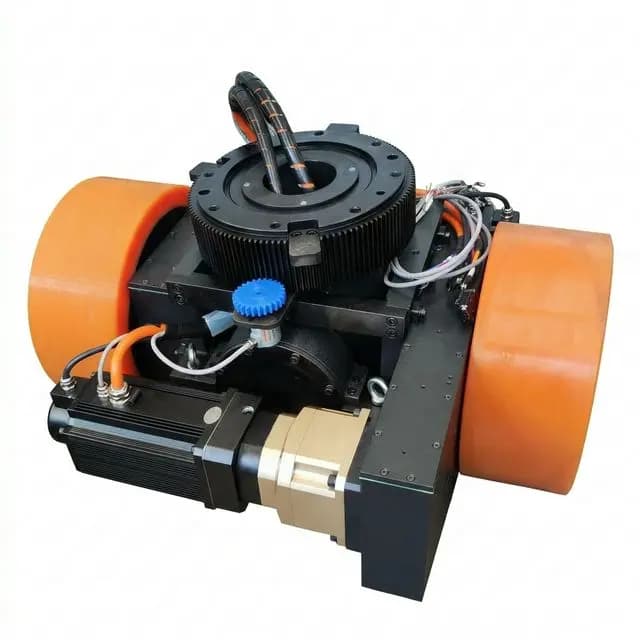
Why it matters for AGV buyers: complex electro-mechanical assemblies often combine motors, gearboxes, polyurethane tires, cast hubs, rollers, bearings, encoders, and harnesses from different regions. Even if the finished AGV is assembled in one country, the invoice risk can shift when component-level origin, HTS classification, and final USTR exclusions are reviewed.
Tariff Compliance Radar & Timeline
| Economy Category | Proposed Additional Duty | Notable Affected Regions | Expected Impact on AGV Components | Timeline |
|---|---|---|---|---|
| Category A (Failed enforcement only) | +10% ad valorem | EU, Mexico, Canada, UK, Malaysia, Taiwan | High-precision servos, planetary gearboxes, polyurethane from EU/Mexico | Comments due July 6, 2026 |
| Category B (Failed imposition & enforcement) | +12.5% ad valorem | China, Japan, Brazil | Full drive wheel assemblies, mecanum wheel rollers, motors | Public hearing July 7, 2026 |
| Exemptions | 0% if covered by Annex A / final exclusion | Product-specific | Components that USTR excludes from proposed action | Check Federal Register notice |
| USMCA Interactions | Potentially complex | North America | Cross-border supply chains (e.g., molding in Mexico) | Await final action / broker guidance |
| High-Power Motors (>750W) | Scenario model only | Asia / Global | Heavy-duty traction motors for payload >1000kg | Q3 2026 planning window |
| Integrated Drive Units | Scenario model only | Global | Custom AMR drive wheels with built-in encoders | Q3 2026 planning window |
| Spare Parts & Consumables | Scenario model only | Global | Replacement tires, bearings, custom harnesses | Q3 2026 planning window |
| Total BOM Cost Risk | -- | Global | 4-8% total AGV unit cost sensitivity if affected imports carry 10-12.5% additional duty | Model before PO release |
Impact on AGV Drive Wheel Sourcing
The proposed tariffs apply at the economy and product scope described by USTR and the Federal Register notice. They do not name AGV wheels directly, so buyers should treat AGV drive wheel assemblies, traction modules, and omnidirectional mobility solutions as affected only after validating product scope, HTS code, country of origin, and exclusions.
- European and Japanese Motors: Many high-end AGVs rely on EU or Japanese servos and gearboxes. If the final action covers those products, the 10% or 12.5% scenario narrows the cost gap between imported premium components and domestically manufactured alternatives.
- Asian Sub-assemblies: Mecanum wheel rollers, cast hubs, and bearing housings imported from Asia could see cost pressure where the country and product scope match the final action.
- Mexican Assembly Lines: USMCA treatment should not be assumed as a complete shield. Mexico is listed among the investigated economies, so buyers need product-exclusion review and country-of-origin evidence before relying on historical landed-cost models.
Who Should Act Now (Action Checklist)
OEM buyers, system integrators, and engineering managers should not wait for final action before checking exposure. The goal is to keep quote validity, supplier alternatives, and customs evidence ready without treating the proposed rates as final law.
- Procurement Managers: Map the HTS codes for all imported wheels, motors, and traction units. Verify the country of origin (COO) at the component level, not just the final assembly location.
- OEM Engineers: Qualify secondary domestic suppliers for critical components like polyurethane tires and planetary gearboxes to avoid line-down situations if costs become prohibitive.
- System Integrators: Re-quote upcoming Q3/Q4 warehouse automation deployments, factoring in a potential 5-10% buffer on mobile robot hardware costs.
- Compliance Teams: Review Annex A and the Federal Register notice to determine whether any drive wheel components are excluded or require separate treatment.
Risks and Boundaries
The situation is dynamic, and buyers must navigate several boundaries:
- Unfinalized Rates: The 10% and 12.5% figures are proposed. They are subject to a public comment period ending July 6, 2026, and a hearing on July 7, 2026. The final rates could be adjusted.
- USMCA Boundary: For goods moving between the U.S., Canada, and Mexico, do not assume historical USMCA treatment resolves the proposed Section 301 exposure. Ask the broker to document product scope, origin logic, and exclusion treatment.
- Scope Definition: The final Federal Register action and Annex A exclusions will dictate whether standalone motors (Chapter 85), complete wheel units (Chapter 84 or 87), or spare parts are covered.
Sourcing Strategy Risk Matrix
To mitigate the proposed Section 301 penalties, buyers must evaluate their specific AGV components against region-specific risks. The following matrix outlines the expected disruption levels and mitigation paths.
| AGV Component Sub-system | Primary Source Regions | HTS Chapter Impact Risk | Estimated Sourcing Cost Increase | Recommended Mitigation Strategy |
|---|---|---|---|---|
| Planetary Gearboxes | EU (Germany, Italy), Japan | High | 10-12.5% | Qualify dual-source from domestic or unaffected regions; absorb cost for low volume. |
| High-Torque Servos (>750W) | Japan, Taiwan, EU | High | 10-12.5% | Expedite Q3 orders; consider design shift to standard NEMA equivalents where feasible. |
| Mecanum / Omni Rollers | China, Malaysia | Critical | 12.5% scenario | Identify nearshore alternatives and validate final country/product scope before supplier substitution. |
| Polyurethane Tires / Castings | Mexico, China | Medium | 10-12.5% | Shift molding operations domestically or leverage localized final assembly to change HTS classification. |
| Custom Wiring Harnesses | Mexico, Taiwan | Medium | 10% | Stockpile critical harness SKUs before August 2026. |
Buyer Action Thresholds (By Fleet Size)
Different scales of automation deployments warrant different responses to a possible 10-12.5% additional duty. Engineering and procurement teams should align their actions with these thresholds:
- Pilot & Small Deployments (1-10 AGVs)
- Threshold: Absorb & Monitor.
- Action: Re-engineering costs (NRE) to swap out a drive wheel will likely exceed the 10% duty scenario on a small BOM. Focus on negotiating volume discounts or extended warranties to offset the hit.
- Mid-Market Scale (10-50 AGVs)
- Threshold: Dual Sourcing & Q3 Pre-purchasing.
- Action: An extra $1,250+ per AGV in a worst-case sourcing model equates to significant lost margin. It is economically viable to expedite critical inventory and begin evaluating a secondary wheel vendor for 2027 deployments.
- Enterprise Fleets (50+ AGVs)
- Threshold: Reshore & Redesign.
- Action: A 10-12.5% increase on 100+ units can damage deployment ROI. Enterprise buyers should enforce strict origin audits on their OEMs immediately and evaluate localized drive modules where the engineering change is justified.
FAQ
Q: Are existing tariffs replaced by this new action?
A: This action is largely viewed as a broader, more aggressive continuation of prior trade actions, potentially stacking on top of regular duties but serving as a broader penalty layer. Buyers should model costs assuming the 10-12.5% is an additional ad valorem duty.
Q: Will USMCA exempt Mexican-manufactured drive wheels from the 10% tariff?
A: No. Mexico was explicitly included in the group of 14 economies found to have failed effective enforcement. Unless an explicit product exemption is granted, USMCA origin will not shield the product from this specific Section 301 action.
Q: When will the tariffs actually hit my procurement invoices?
A: The public comment period ends July 6, 2026. Assuming rapid implementation by the USTR following the July 7 hearings, these could take effect as early as late July or August 2026.
Related Procurement Workflows
- Convert this risk view into quote fields with the AGV Drive Wheel RFQ Checklist for OEM Buyers.
- Re-run mechanical and motor limits with AGV Drive Wheel Torque and Motor Sizing.
- Compare lateral-motion sourcing choices in Mecanum Wheel vs Omni Wheel.
- Review configurable heavy-duty options on the Forklift AGV Drive Wheel Product Page.
- Send tariff assumptions, drawings, and duty-cycle targets through the technical RFQ contact form.
Sources
- USTR Official Press Release (2026-06-02): USTR Makes Findings and Proposes Action in 60 Section 301 Investigations Relating to Failures to Take Action to Prohibit or Restrict the Importation of Goods Made with Forced Labor.
https://ustr.gov/about/policy-offices/press-office/press-releases/2026/june/ustr-makes-findings-and-proposes-action-60-section-301-investigations-relating-failures-take-action (Checked: 2026-06-25) - USTR Official Report PDF (2026-06-02): Report in Section 301 Investigations.
https://ustr.gov/sites/default/files/files/Press/Releases/2026/USTR%20Report%20Sec%20301%20FL%20301%206-2-26%20FINAL%20for%20upload.pdf (Checked: 2026-06-25) - GovInfo Federal Register PDF (2026-06-05): Notice of determinations and request for comments concerning actions in Section 301 investigations.
https://www.govinfo.gov/content/pkg/FR-2026-06-05/pdf/2026-11296.pdf (Checked: 2026-06-25)