AGV Forklift Manufacturers List & Selection Tool
Not all automated forklift manufacturers fit every use case. Screen your payload, environment, and fleet size requirements to find the right OEM or integrator tier, and learn how to evaluate their drive wheel reliability.
Understanding AGV Forklift Manufacturers
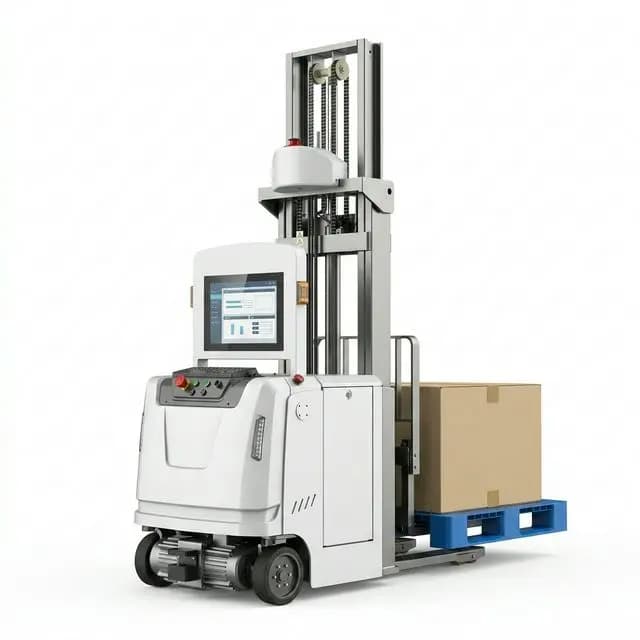
The landscape of AGV forklift manufacturers is diverse, ranging from traditional manual forklift companies adding automation layers, to pure-play robotics startups, and specialized integrators. Choosing the best AGV forklift manufacturers requires looking beyond the brochure and analyzing their core drive technology, chassis stability, and software interoperability.
How This Manufacturers List Should Be Used
Use the AGV forklift manufacturers list as a shortlist framework, not a static directory. The goal is to match project constraints to the right manufacturer category, then request comparable RFQ evidence from each candidate.
| Decision Question | Evidence to Request | Boundary |
|---|---|---|
| Does the vendor build automated forklifts, or only AMRs? | Public automated forklift pages, lift-truck model references, and comparable site deployments. | Public product evidence does not prove payload fit for your floor or rack geometry. |
| Can it join a mixed-vendor fleet? | VDA 5050 version, supported action set, and fleet manager integration references. | Interface support can still limit mast, side-shift, or edge-case forklift functions. |
| Is the safety case specific enough? | ISO 3691-4:2023 documentation, risk assessment scope, and tested traffic scenarios. | Standards references do not replace site-specific validation. |
| Will the drive wheel survive the duty cycle? | Wheel material, torque margin, encoder resolution, MTBF, and swap-time data. | Marketing names are insufficient without load, floor, ramp, and temperature assumptions. |
Evidence-Backed Manufacturer Shortlist Matrix
The table below is a source-reviewed shortlist as of 2026-07-14. It is intentionally not a universal ranking. Its purpose is to turn the AGV forklift manufacturers list intent into comparable RFQ questions: public evidence, strongest fit, and what must still be verified.
| Manufacturer | Public Evidence | Strongest Fit | RFQ Verification |
|---|---|---|---|
| Toyota Material HandlingGlobal OEM automation line | Official automated guided vehicle page with automated guided forklift category coverage. | Large indoor fleets that need mature forklift service coverage and standardized support. | Dealer SLA, software integration scope, local spare parts, and drive-wheel MTBF for the target payload. |
| KION Group brands (STILL/Linde)Global OEM automation line | Official STILL automated industrial trucks page covering standardized automated forklift truck platforms. | Multi-site programs that need OEM scale, brand coverage such as Linde/STILL, and integration partners. | Brand-specific automated forklift model, country coverage, VDA 5050 functions, and service ownership. |
| SeegridRobotics-first lift AMR | Official Lift CR1 and Lift RS1 AMR pages show autonomous lift-truck capabilities. | Facilities prioritizing vision-guided automation, brownfield deployment, and robotics software maturity. | Payload, lift height, fork geometry, traffic scenarios, and local support response for your region. |
| VisionNav RoboticsAGV forklift specialist | Official product page lists AGV forklift products across multiple equipment formats. | Projects needing a broad AGV forklift catalog and willingness to validate regional support depth. | Local integrator capacity, safety documentation, remote support model, and wheel-material options. |
| AGILOXAutonomous forklift platform | Official OCF product page describes a self-driving counterbalanced forklift with omnidirectional movement. | Flexible indoor layouts where maneuverability, compact traffic patterns, and fast commissioning matter. | Payload boundary, mast options, floor conditions, battery duty cycle, and support coverage. |
| DaifukuAutomation system integrator | Official AGV solution page supports automated guided vehicle integration evidence. | Complex sites where AGV forklifts must fit a wider warehouse automation or material-handling system. | Forklift-specific scope, subcontracted vehicle supplier, handoff responsibilities, and lifecycle support. |
Limitation: public pages can confirm category capability, but they do not prove the exact forklift model, lift height, wheel compound, safety scope, or local service SLA for your facility.
Turn the shortlist into an RFQ packet
Share payload, floor, route, lift-height, and support assumptions so the drive wheel review can flag torque, tire, encoder, braking, and service evidence gaps before vendor comparison.
Market Context & Integration Risks
As of 2026-07-14, public manufacturer evidence points to three practical buying paths: forklift OEM automation lines, robotics-first lift-truck platforms, and custom integrators. The hard part is rarely finding names for a list; it is comparing software interoperability, safety scope, local support, and drive-wheel durability on the same evidence basis.
How to Evaluate the Drive Wheel System
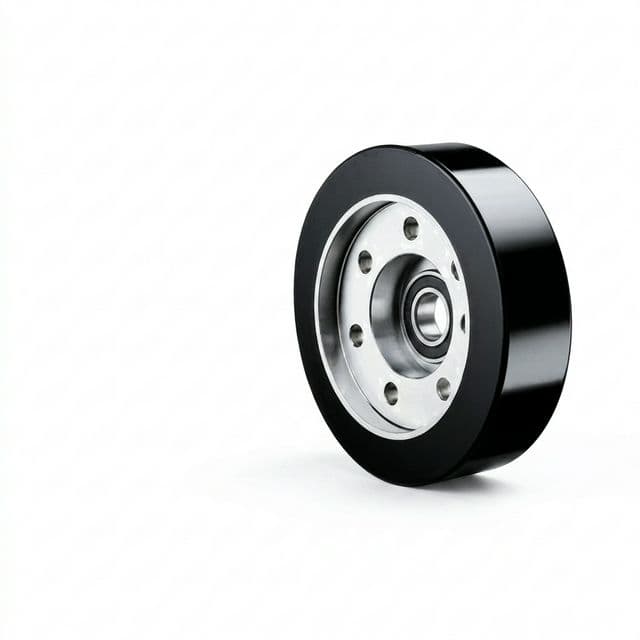
A critical point of failure in any automated forklift is the drive wheel assembly. Unlike manual forklifts where an operator can adapt to a slipping wheel, an AGV relies entirely on predictable traction to maintain its safety fields and navigation accuracy.
| Evaluation Area | What to ask the manufacturer | Why it matters |
|---|---|---|
| Tire Material | Is the drive wheel using Vulkollan® or standard polyurethane? | High-load automated braking causes standard PU to delaminate. |
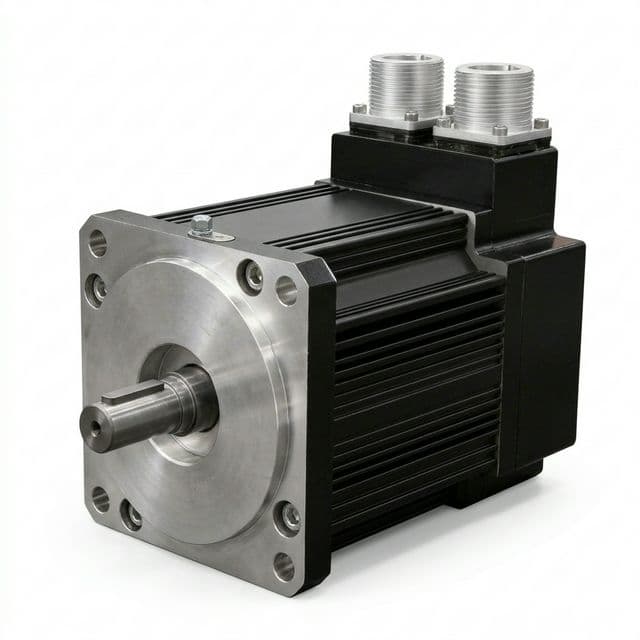
| Torque Margin & Payload Limit | What is the continuous torque rating vs peak requirement? At what payload is a dual-drive system required? | Undersized motors overheat on long ramps. Single drive units typically max out around 3,000 kg before requiring dual-drive configurations. |
| Encoder Resolution | Are the motor encoders absolute or incremental? What resolution? | Affects millimeter-level docking accuracy in narrow aisles. |
Frequently Asked Questions
Sources & Verifiability
Canonical coverage: /learn/agv-forklift-manufacturers is the single maintained URL for both "agv forklift manufacturers" and "agv forklift manufacturers list" intent. No separate list route is published.
Evidence review date: 2026-07-14. Vendor examples are category signals, not a live ranking or endorsement.
How to verify: Use the sources below to confirm public capability claims, then require each candidate to provide project-specific safety, integration, service, and drive-wheel reliability evidence.
- Automated guided vehicle market referenceUsed for market context only; manufacturer shortlist decisions below rely on public product evidence and RFQ verification.
- VDA 5050 Interface LimitationsVersion 3.0.0. Standardization vs. Flexibility limitations in order-based vs instant actions.
- ISO 3691-4:2023ISO lists ISO 3691-4:2023 as published and shows a draft replacement track; verify the current edition before RFQ release.
- Toyota Material Handling AGVsOfficial evidence of automated guided forklift product-category coverage and Tier 1 scale.
- STILL automated industrial trucks (KION Group brand)Official KION Group brand evidence for automated industrial and forklift-truck coverage.
- Seegrid Lift CR1 AMROfficial robotics-first evidence for autonomous lift-truck/AMR category coverage.
- VisionNav AGV forklift productsOfficial product evidence for AGV forklift series and deployment-specific product filtering.
- AGILOX OCF autonomous forkliftOfficial evidence for an omnidirectional autonomous counterbalanced forklift platform.
- Daifuku automated guided vehiclesOfficial system-integrator evidence for automated guided vehicle solutions.
Information is provided for strategic planning; always request specific MTBF data and conduct pilot testing before deployment.
Validate Drive Wheel Evidence Before Vendor Award
Use the manufacturer category only as a shortlist. Final supplier selection should confirm continuous torque, braking duty cycle, wheel compound, spare-part availability, and swap-time evidence for the exact site profile.
Related AGV Engineering Resources
Continue learning about AGV drive architectures and motor specifications.