4 Wheel Omni Drive Fit Checker and Decision Report (101.6mm + 3.25 in)
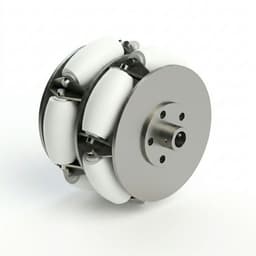
Run an immediate fit check for omnidirectional wheels decisions, including 4 wheel omni drive, 101.6mm omnidirectional wheel, and 3.25 omnidirectional wheels, then review the calculations, product evidence, and route limits before requesting a quote.
18 public sources checked through 2026-05-17
Published 2026-04-26; last updated 2026-05-17 (stage1b deep research enhancement)
3 scenarios from smooth indoor to seam-heavy transfer route
Screening estimates with product-specific evidence
Default profile preview: Not fit, move to stronger omni module (129%)
Run the checker to get a result for your exact 101.6mm or 3.25-inch omnidirectional wheel profile.
Baseline preview below uses the default profile until you run calculation with your own inputs.
This preview is from default inputs. Click Calculate 101.6mm omni fit to generate your own result and decision CTA.
Usage vs 80kg/set benchmark
129%
Roller contact stress index
0.64
Traction stability score
66
Stage1b Audit: Gap Closure
Audit updated May 17, 2026| Gap found | Decision impact | Evidence update | Status |
|---|---|---|---|
| Alias term "101.6mm omnidirectional wheel" was not explicitly mapped to 4-inch nominal class in-page. | Buyers could misread 101.6mm as a distinct standard class and request mismatched quotes. | Added exact NIST conversion linkage and explicit "101.6mm = 4-inch nominal class" boundary notes. | Closed |
| Public load references were mixed across per-wheel and per-set units without one audit basis. | Cross-vendor comparison could bias sourcing choices and margin calculations. | Added NIST-normalized comparison path (kg/wheel and kg/set) across Nexus and AndyMark references. | Closed |
| Wheel-level checker output could be mistaken as system-level AGV compliance evidence. | Teams might skip required system safety workflow and over-trust component pre-screening. | Added explicit ISO 3691-4 and ANSI/ITSDF B56.5 scope boundaries in evidence and FAQ sections. | Closed |
| Floor condition and slope effects were visible in formulas but not anchored to operational regulation context. | Scenario mismatch risk for routes with slippery zones or grade transitions. | Added OSHA 1910.178 and OSHA physical-conditions guidance references as route-risk boundary anchors. | Closed |
| Kinematic rationale for omnidirectional assumptions was not traceable to a primary academic source. | Engineering reviewers could question whether lateral-motion penalties are arbitrary. | Added CMU kinematic-model source and clarified that it supports motion modeling, not durability limits. | Closed |
| Orientation and surface sensitivity were not tied to measured rolling-resistance ranges for omni wheels. | Users could under-estimate risk for high-angle lateral travel on mixed surfaces. | Added Sensors 2025 experimental evidence (0 to 90 degree sweep, concrete/aluminum surfaces, and force-range data) into source and decision tables. | Closed |
| 4 wheel omni drive wording was mapped to diameter aliases, but wheel-arrangement sensitivity was not quantified for straight-path drift and cycle time. | Teams could assume any four-wheel placement is equivalent and skip layout-level tuning before pilot lock. | Added Applied Sciences 2022 arrangement evidence with quantified square-path error/time deltas and explicit “geometry tradeoff, not universal ranking” boundary notes. | Closed |
| Inverse-kinematics validity was not separated from velocity-moment balance risk in 4-wheel omni tracking behavior. | Procurement and controls reviews could over-trust mathematically valid IK while ignoring spontaneous-turning failure modes. | Added Applied Sciences 2023 velocity-moment evidence showing straight-line dependence on moment balance, with explicit counterexample/limits in the decision table. | Closed |
| Controller-level preconditions (wheel order, radius parameters, timeout, open-loop mode) were not explicit in omni release gates. | Programs could pass mechanical screening but fail integration due misconfigured controller geometry or stale-command handling. | Added ROS omni controller userdoc/API evidence and converted it into concrete configuration checks for 4-wheel omni handoff. | Closed |
| 3.25-inch alias handling did not quantify speed-vs-torque tradeoff against the 4-inch baseline. | Teams could change diameter without recalculating cycle-time and motor thermal-margin consequences. | Added explicit ratio guidance (3.25/4 = 81.25% linear speed at equal rpm; torque-arm ratio = 1.23x) and linked it to action steps. | Closed |
| 3.25-inch public references were not separated by disclosure quality (geometry-only vs load-rated). | Procurement could over-trust catalog entries that publish size but omit load-capacity basis. | Added VEX geometry/compatibility evidence as spec-visibility-only and kept missing-load entries under pending-confirmation gates. | Pending confirmation |
| Compliance boundary notes did not include standard lifecycle updates or excluded operating environments. | Programs could assume wheel pre-screen logic already covers severe climate, explosive, or public-road scenarios. | Added ISO 3691-4 exclusion scope and to-be-revised status, plus ANSI 2024 revision traceability in the evidence section. | Closed |
| Some 4-inch omni product pages did not publish explicit load ratings. | RFQ ranking could treat incomplete specs as equal to verified load classes. | Added explicit pending-confirmation path: no-load-rating listings now require signed supplier datasheet and test-method disclosure before release. | Pending confirmation |
| No open standard provides universal pass/fail load thresholds for a 101.6mm omnidirectional wheel component. | High risk of treating heuristics as certification thresholds. | Kept explicit pending-confirmation status and require supplier fatigue reports plus pilot wear trend before final release. | Pending confirmation |
| No open universal numeric tolerance was found for acceptable velocity-moment imbalance in 4-wheel omni arrangements. | False confidence in copying one arrangement constant to another footprint or wheel-radius mix. | Marked as pending confirmation and enforced project-specific pilot KPI definition for straightness drift and heading error before release. | Pending confirmation |
Report Summary: Key Conclusions
Updated May 17, 2026> 110% benchmark usage or stress index > 5.2 or stability < 55
Compared against public 100mm omni references (20kg/wheel and 15kg/wheel vendor class) plus orientation-sensitive rolling-resistance evidence
Higher index means increased roller stress and wear risk
Rubber roller on Mixed concrete with joints
- Indoor AGV routes with floor joints around or below 2 mm.
- Projects that need quick pre-screening before detailed supplier validation.
- Teams triaging 4 wheel omni drive, 3.25-inch, or 101.6mm omni candidates before supplier fatigue testing and pilot validation.
- Outdoor or contamination-heavy lanes without reliable floor and wear data.
- Scenarios requiring final compliance evidence without system-level safety work.
- High-shock missions where benchmark usage consistently exceeds 110%.
- Sustained routes above 10% grade without dedicated pilot and engineering review.
4 wheel omni drive: Selection Limits
Alias intent answered on /learn/omni-wheels| Check item | Known value | Decision impact |
|---|---|---|
| 4-wheel geometry baseline | ROS omni kinematics model uses theta = 2pi/n; n = 4 implies 90 degree spacing baseline | Verify actual wheel placement against this baseline before trusting controller-level simulations |
| Arrangement sensitivity | 2022 test: square-path average distance error improved from 0.0133 m to 0.0044 m, average time from 19.4 s to 15.6 s after arrangement change | Do not assume any four-wheel placement is equivalent for straight tracking or cycle time |
| Counterexample: IK-valid but still turning | 2023 velocity-moment study shows imbalanced arrangements can produce spontaneous turning and higher angular velocity as speed rises | Add arrangement-specific heading-drift KPI and pilot gate before release commitment |
| One-wheel failure boundary | Same 2023 method reports at least one straight-line direction may remain if the failed wheel does not add friction and does not detach | Treat failure-tolerance claims as pending confirmation until fault-injection pilot evidence exists |
| Controller configuration gate | ROS omni userdoc requires anti-clockwise wheel order from +x and consistent wheel/robot radius parameters | Wrong order or radius values can distort curvature and speed even when hardware load looks acceptable |
| Timeout and odometry mode gate | ROS API currently exposes 0.5 s default cmd_vel timeout member and optional open-loop odometry mode | Version-pin timeout policy and validate open-loop vs feedback mode before release |
| Open universal threshold for velocity-moment imbalance | N/A (no reliable universal open numeric cutoff) | Define project-specific straightness and heading KPI in pilot acceptance |
Sources for these selection checks: ROS 2 Control omni kinematics + controller userdoc/API, Applied Sciences 2022 (12:5798), and Applied Sciences 2023 (13:1584), checked through 2026-05-17.
Applicable: teams using 4 wheel omni drive wording that need one URL for pre-screening plus explicit geometry/controller release gates.
Not applicable: direct release decisions without arrangement-specific straightness KPI, fault-injection pilot evidence, supplier load basis, and controller parameter validation logs.
Methodology and Evidence
1) Dynamic load/wheel = static load x safety factor x speed factor x joint factor x grade factor x floor factor.
2) Benchmark usage % = dynamic load/set / 80kg primary benchmark, with a secondary 60kg lower-reference check.
3) Stress index = load/roller x diameter ratio x material multiplier.
4) Stability score penalizes floor roughness, joints, speed, route grade, and long daily distance.
| Assumption | Value | Reason |
|---|---|---|
| Alias normalization | 4 in = 101.6 mm (exact conversion) | NIST exact conversion prevents splitting equivalent alias terms into false separate classes. |
| 3.25-inch alias normalization | 3.25 in = 82.55 mm (exact conversion) | Keeps "3.25 omnidirectional wheels" mapped to this canonical URL while marking it as a non-baseline diameter case. |
| Diameter tradeoff reference | 3.25/4 = 0.8125 speed ratio; 4/3.25 = 1.23 torque-arm ratio | Provides immediate cycle-time and force-envelope sanity checks when replacing the 4-inch baseline with 3.25-inch geometry. |
| Benchmark set load | 60-80 kg/set (public 100mm omni examples) | Nexus 100mm omni references publish 15-20kg/wheel; this checker uses 80kg/set primary and 60kg/set lower-reference guardrail. |
| Cross-vendor unit normalization | 1 lb = 0.4535924 kg | Used to compare AndyMark 120 lb/wheel with kg-based supplier claims. |
| Architecture comparison guardrail | Roller count + wheel width are mandatory fields | 4-inch class references can differ materially (for example, 18-roller narrow wheels vs 8-roller wider wheels), so diameter-only comparison is insufficient. |
| 4-wheel omni geometry baseline | Validate equiangular 90 degree spacing assumption explicitly | Official omni-wheel kinematics defines theta = 2pi/n; for n = 4 this maps to 90 degree spacing and should be verified against actual chassis footprint. |
| Arrangement sensitivity gate | Do not assume all 4-wheel layouts share identical straight-path behavior | Peer-reviewed 2022 testing showed measurable path-error and cycle-time differences between two four-wheel arrangements under the same occupied area. |
| Velocity-moment drift KPI | Define arrangement-specific heading-drift acceptance in pilot (pending universal threshold) | 2023 velocity-moment study links imbalance to spontaneous turning; no open universal numeric threshold is confirmed for all layouts. |
| One-wheel-failure claim boundary | Treat post-failure straight-motion claims as conditional and verify with fault injection | Published method states straight-direction retention depends on idealized non-interfering failed wheel assumptions. |
| Controller parameter contract | Wheel order, wheel_radius, robot_radius, and wheel_offset must be validated before release | ROS omni controller docs warn incorrect parameters distort curvature and speed outcomes even when command input is valid. |
| Timeout/odometry mode gate | Version-pin cmd_vel timeout and explicitly choose open-loop vs feedback mode | Current ROS API surfaces a 0.5 s default timeout member and optional open-loop mode, so stale-command and odometry behavior must be tested explicitly. |
| Speed factor coefficient | 0.08 per m/s | Conservative amplification for lateral movement in first-pass screening. |
| Joint factor coefficient | 0.02 per mm | Approximates repeated seam impact amplification in omnidirectional transfer routes. |
| Grade factor coefficient | 0.015 per % grade | Keeps slope effect explicit and aligned with eCFR 1910.178(n)(7)(i) >10% travel-risk boundary. |
| Orientation sensitivity evidence | Use rolling-resistance spread from Sensors 2025 as a risk cue | Peer-reviewed quasi-static testing shows strong angle dependence with peak mean resistance at 60 degrees. |
| Stress-index thresholds | 3.6 / 5.2 | Heuristic engineering cutoffs; no open public standard with identical numeric limits was found. |
| Missing load data handling | No declared load rating = pending confirmation | Listings without explicit load basis cannot be normalized into kg/wheel or kg/set comparisons. |
| Compliance boundary | ISO 3691-4 / ANSI B56.5 are system-level | Checker output is component pre-screening and cannot replace system-level safety workflow. |
| Source | Use |
|---|---|
| NIST Guide to SI Appendix B.8 NIST page updated 2025-08-18, checked 2026-04-29 | Exact inch-to-meter conversion factor used to map 4 in to 101.6 mm (1 in = 2.54E-02 m exact). US national metrology source; conversion factor is marked exact. |
| CMU RI publication: Kinematic Modeling of Wheeled Mobile Robots Journal article date 1987-04, repository page checked 2026-04-29 | Peer-reviewed wheel-modeling framework for omnidirectional wheel arrangements and Jacobian-based kinematics. Academic primary source for motion-model assumptions; not a durability-rating source. |
| ROS 2 Control: Wheeled mobile robot kinematics ROS 2 docs checked 2026-05-17 | Official omni-wheel kinematics reference defines the n-wheel model and equiangular placement rule (theta = 2pi/n), so 4-wheel setups map to 90 degree spacing assumptions. Official framework documentation; model scope is explicit but still requires project-specific parameter validation. |
| ROS 2 Control Rolling userdoc: omni_wheel_drive_controller ROS 2 rolling userdoc checked 2026-05-17 | Controller userdoc requires anti-clockwise wheel-name order from +x, documents wheel_radius/robot_radius/wheel_offset parameters, and warns wrong values distort curvature and speed. Official controller documentation with implementation-level parameter contracts. |
| ROS 2 Control API: OmniWheelDriveController ROS 2 API docs checked 2026-05-17 | Current API reference shows default cmd_vel timeout member at 0.5 s and exposes chained-reference interfaces for higher-layer control integration. Primary package API documentation; version details are implementation-specific and should be tracked per release. |
| Applied Sciences 2022 (12:5798): four-omni-wheel arrangement for compactness Article published 2022-06-15, checked 2026-05-17 | Compared conventional versus compact 4-wheel omni arrangements and reported lower square-path average distance error (0.0133 m to 0.0044 m) plus faster average completion time (19.4 s to 15.6 s) for the proposed arrangement. Peer-reviewed experiment with published trajectory-error and timing tables; testbed and controller choices still constrain direct transfer. |
| Applied Sciences 2023 (13:1584): omni-wheel arrangement via velocity moments Article published 2023-02-01, checked 2026-05-17 | 4-wheel experiments showed near-zero velocity-moment balance goes straight, while imbalanced layouts can produce spontaneous turning and larger angular velocity with higher command speed. Peer-reviewed method with quantitative tables on 4-wheel/6-wheel arrangements; sensitivity constants remain arrangement-specific. |
| Nexus Robot 4" (100mm) double plastic omni wheel basic (14049) Product page checked 2026-04-29 | Published specs include 20kg load capacity per wheel, 100mm diameter, 16mm width, and 18 rollers. Manufacturer page with structured spec table; claim remains product-specific. |
| Nexus Robot 100mm double plastic omni wheel with bearing (14058) Product page checked 2026-04-29 | Published specs include 15kg load capacity per wheel, 100mm diameter, 30mm width, and 18 rollers. Manufacturer page with structured spec table; claim remains product-specific. |
| AndyMark 4 in DuraOmni Wheel Product page checked 2026-04-29 | Published 4 in omni product specs include 120 lb load capacity, 8 rollers, and 2 in width. Manufacturer listing; direct cross-vendor comparison still requires unit and denominator normalization. |
| AndyMark 3 in Aluminum Omni Wheel (3/8 in Hex Bore) Product page checked 2026-04-29 | Published specs include 3 in diameter, 50 lb load capacity, 6 rollers, and 0.94 in width. Manufacturer page; listing text indicates FTC-oriented usage context and remains product-specific. |
| VEX Wheels Catalog Catalog page checked 2026-04-29 | Catalog lists 3.25 in and 4 in omni SKUs, weights, and shaft compatibility, but no explicit load-capacity field. Official manufacturer catalog for published/omitted fields; duty class must be confirmed separately. |
| REV ION Omni Wheels (4 in variant) Product page checked 2026-04-29 | Published specs include 4 in diameter, 1.50 in width, and material stack (glass-filled nylon, POM, TPR), but no explicit load rating. Manufacturer page is primary for what is and is not publicly disclosed. |
| Sensors 2025: Experimental rolling resistance in omnidirectional wheels Article published 2025-08-13, checked 2026-04-29 | Quasi-static experiments report orientation-sensitive rolling resistance with highest mean at 60 degrees and measurable oscillatory force behavior. Peer-reviewed experiment with explicit loads, surfaces, and angle sweep; setup still requires context mapping to production duty. |
| ANSI/ITSDF B56.5-2024 ANSI store page checked 2026-04-29 | US consensus standard scope for driverless AGV systems; document history states the 2024 edition revises 2019. Publisher listing metadata is public; full technical clauses are paywalled. |
| ISO 3691-4:2023 Edition 2 published 2023-06; ISO status page checked 2026-04-29 | Safety scope baseline for driverless industrial trucks; public abstract lists excluded severe-climate/public-road/explosive-use cases and marks lifecycle stage as to-be-revised. ISO publisher metadata and abstract are public; full technical clauses remain paywalled. |
| eCFR 29 CFR 1910.178 eCFR page checked 2026-04-29 (currentness marker 2026-04-27) | Operational slope clause 1910.178(n)(7)(i) includes explicit >10% grade handling requirement for loaded trucks. Federal codification source (authoritative but unofficial online edition). |
| OSHA PIT eTool: Physical Conditions OSHA page checked 2026-04-29 | Operational floor prerequisites: surface strength, obstruction control, and loading-limit checks. Public guidance content from OSHA. |
| Decision question | New data point | Boundary / counterexample | Action | Sources |
|---|---|---|---|---|
| Should "3.25 omnidirectional wheels" be handled on a separate URL? | NIST Appendix B.8 exact inch conversion maps 3.25 in to 82.55 mm. | 3.25-inch diameter is a non-baseline size in this tool variant, so output confidence and boundary review remain mandatory. | Keep 3.25 intent on the same canonical route and run a boundary-reviewed pre-screen by entering 82.55mm diameter. | NIST SP 811 Appendix B.8 (checked 2026-04-29) |
| Is "101.6mm omnidirectional wheel" a different class from 4-inch omni wheel? | NIST Appendix B.8 publishes inch conversion as exact; 4 in maps to 101.6 mm by definition. | Nominal diameter equivalence does not guarantee identical width, hub architecture, or load rating. | Treat 101.6mm as alias wording for 4-inch class and request full spec table before RFQ comparison. | NIST SP 811 Appendix B.8 (checked 2026-04-29) |
| Does "4 wheel omni drive" mean any 4-wheel placement has equivalent straight-tracking behavior? | A 2022 four-wheel omni experiment reported lower square-path average distance error (0.0133 m to 0.0044 m) and lower average completion time (19.4 s to 15.6 s) after changing wheel arrangement under the same occupied area. | Results are from one robot/controller/test-path setup and cannot be copied as a universal layout ranking constant. | For each footprint, validate straightness and cycle time experimentally before freezing wheel placement or PO. | Applied Sciences 2022, 12(12):5798 (checked 2026-05-17) |
| Can inverse-kinematics equations alone guarantee straight motion in 4-wheel omni layouts? | A 2023 velocity-moment study observed near-zero angular velocity in balanced examples, while imbalanced examples produced spontaneous turning and larger angular velocity as speed rose. | Moment-balance constants depend on wheel arrangement and radius; values are not transferable without recalibration. | Add arrangement-specific heading-drift KPI and reject layouts that fail pilot straight-path tolerance. | Applied Sciences 2023, 13(3):1584 (checked 2026-05-17) |
| If one wheel drive fails, is a 4-wheel omni platform automatically unrecoverable? | The 2023 velocity-moment method notes at least one straight-line direction may remain under a one-wheel actuator failure case in the ideal model. | The same paper states this assumes the failed wheel does not add friction and does not fall off; real failures can violate this condition. | Treat one-wheel-failure behavior as pending confirmation and validate with fault-injection pilot tests before release claims. | Applied Sciences 2023, 13(3):1584 (checked 2026-05-17) |
| What controller assumptions must be checked before using 4-wheel omni-drive screening output in software integration? | ROS omni controller docs require anti-clockwise wheel order from +x and parameter consistency for wheel radius and robot radius; 4-wheel symmetric cases map to 90 degree spacing in the official kinematics model. | Misordered wheel names or wrong radius parameters can distort curvature/speed even if mechanical load screening looks acceptable. | Add wheel-order and radius-parameter verification to pre-pilot integration checklist and block release when undefined. | ROS 2 rolling omni_wheel_drive_controller + ROS mobile_robot_kinematics (checked 2026-05-17) |
| Can stale-command behavior be ignored when evaluating a 4 wheel omni drive release path? | ROS OmniWheelDriveController API currently exposes a 0.5 s default cmd_vel timeout member and optional open-loop odometry mode. | Timeout/open-loop defaults are implementation details and may change across releases; open-loop also removes feedback-based odometry correction. | Version-pin timeout policy and explicitly validate closed-loop vs open-loop behavior in software-in-the-loop and pilot logs. | ROS 2 Control OmniWheelDriveController API (checked 2026-05-17) |
| What changes immediately when moving from 4-inch baseline to 3.25-inch diameter at the same motor rpm? | Using exact inch conversion and circumference proportionality, 3.25/4 = 0.8125 (about 18.75% lower linear speed), while torque-arm ratio is 4/3.25 = 1.23. | This ratio is geometric only; controller limits, traction losses, and motor thermal curve still drive delivered performance. | Recalculate cycle time and motor thermal margin whenever a 4-inch baseline is replaced by 3.25-inch wheels. | NIST SP 811 Appendix B.8 + circumference proportionality derivation (checked 2026-04-29) |
| Can 100-101.6mm omni wheels be assumed to share one load class? | Nexus 100mm basic (14049) lists 20kg/wheel while 100mm bearing variant (14058) lists 15kg/wheel. | Same nominal diameter still shows a 33% spread before adding material, route, and maintenance effects. | Keep both kg/wheel and kg/set in comparison sheets and avoid single-value capacity assumptions. | Nexus 14049 + 14058 pages (checked 2026-04-29) |
| How should lb-based omni claims be merged with kg-based claims? | AndyMark 4 in DuraOmni lists 120 lb load capacity; NIST conversion factor gives ~54.4 kg per wheel. | Per-wheel values still need mapping to wheel count and duty assumptions before set-level decisions. | Normalize supplier claims to kg/wheel and derived kg/set before ranking options. | AndyMark 4 in DuraOmni + NIST SI conversion (checked 2026-04-29) |
| Can smaller omni diameters be treated as the same capacity class as 4-inch options? | AndyMark public specs show 4 in DuraOmni at 120 lb with 8 rollers, while 3 in aluminum omni lists 50 lb, 6 rollers, and 0.94 in width. | Same brand still shows large capacity and topology spread; values are SKU-specific and not transferable by diameter alone. | Require SKU-level load-rating basis and duty assumptions before extrapolating 3-inch to 4-inch classes. | AndyMark 4 in DuraOmni + 3 in aluminum omni pages (checked 2026-04-29) |
| Are all 4-inch/100mm omni architectures directly comparable by diameter only? | Nexus 14049 publishes 18 rollers and 16mm width, while AndyMark 4 in DuraOmni publishes 8 rollers and 2 in width with 120 lb rating. | Diameter aliasing does not normalize roller topology, contact geometry, or duty assumptions. | Keep roller count, wheel width, and denominator basis as mandatory RFQ comparison fields. | Nexus 14049 + AndyMark DuraOmni pages (checked 2026-04-29) |
| Does every 3.25-inch omni listing publish load basis suitable for industrial ranking? | VEX wheels catalog lists 3.25 in omni SKUs, travel class, weight, and shaft compatibility, but no explicit load-capacity field. | Geometry and compatibility data alone do not establish industrial duty class or fatigue margin. | Keep 3.25 listings in pending-confirmation status until supplier load statement and test method are available. | VEX wheels catalog page (checked 2026-04-29) |
| Can this checker output be used as final AGV safety compliance evidence? | ISO 3691-4 scope is system-level driverless truck safety; ANSI/ITSDF B56.5 scope is driverless AGV systems. | Neither public listing provides wheel-only pass/fail thresholds for a single diameter class. | Use checker output as pre-screen input, then route to formal system-level compliance workflow. | ISO 3691-4 + ANSI/ITSDF B56.5 pages (checked 2026-04-29) |
| Do ISO/ANSI references automatically cover severe-climate, public-road, or explosive-operation edge cases? | ISO 3691-4 public abstract explicitly excludes severe climates, operation in potentially explosive atmospheres, and public-road operation; ISO status page marks the standard as to be revised. | Public metadata confirms scope and lifecycle only; full technical clauses still require licensed standards access. | Treat these environments as out-of-model for wheel pre-screening and trigger dedicated compliance workstream. | ISO 3691-4 public abstract/status + ANSI B56.5 listing (checked 2026-04-29) |
| Should floor slope and surface condition stay optional in first-pass selection? | eCFR 1910.178(n)(7)(i) states loaded trucks on grades over 10% must travel with load upgrade; OSHA guidance also highlights slope/surface handling risk. | Regulatory and guidance context informs operation boundaries but not direct wheel-fatigue pass/fail values. | Treat unknown route-grade or surface data as low-confidence input and block direct PO decisions. | eCFR 1910.178(n)(7)(i) + OSHA PIT eTool (checked 2026-04-29) |
| How large can rolling resistance variation be across orientation and surface? | Sensors 2025 reports quasi-static resistance means from 1.04 to 10.34 N on concrete and 1.08 to 10.11 N on anodized aluminum across 0 to 90 degrees, with highest mean at 60 degrees under both tested loads (117.7 N and 215.8 N). | Study uses quasi-static dual-row passive-roller setup; full-speed industrial route dynamics still need pilot validation. | Treat high-angle lateral segments and rough transitions as explicit pilot risk multipliers in procurement reviews. | Sensors 2025 (doi:10.3390/s25165026, checked 2026-04-29) |
| Can a 4-inch omni listing without load rating enter direct capacity ranking? | REV ION 4 in omni page publishes diameter/width/material but no explicit load rating. | Without a declared load basis, no reproducible kg/wheel or kg/set normalization is possible. | Mark as pending confirmation and require supplier load statement plus test method before PO. | REV ION Omni Wheels page (checked 2026-04-29) |
| Do omnidirectional wheel kinematic models directly provide durability ratings? | CMU kinematic-modeling reference supports wheel-constraint and Jacobian motion formulations, not material-fatigue limits. | Motion-model validity does not replace route-specific wear and impact testing. | Separate motion controllability decisions from durability release gates in project reviews. | CMU 1987 publication page (checked 2026-04-29) |
| Are the 85%/110% benchmark bands official standards for 101.6mm omni wheels? | No open public source was found with identical benchmark/stress-index cutoffs for this component class. | Current thresholds remain internal pre-screen heuristics. | Status pending confirmation: require supplier fatigue evidence and pilot trend data before release. | Source audit updated 2026-04-29; detailed standards clauses remain paywalled |
Time marker: references above were checked through 2026-05-17.
Comparison, Boundaries, and Risks
| Option | Published load reference | Wear risk | Best fit | Evidence status |
|---|---|---|---|---|
| 101.6mm (4 in) double-plastic omni, basic | 20 kg/wheel (80 kg/set) public reference | Medium | Indoor routes with controlled seam height and moderate duty | Public product-page evidence available |
| 100mm double-plastic omni with bearing | 15 kg/wheel (60 kg/set) public reference | Medium-High | Lighter payload and lower-impact motion profiles | Public product-page evidence available |
| 4 in DuraOmni (AndyMark) | 120 lb/wheel (~54.4 kg/wheel after NIST conversion) | Medium | Projects using vendor-specific architecture and known duty assumptions | Public listing available; denominator/unit normalization required for comparison |
| 4-wheel omni layout tuning (same footprint, same wheel class) | Applied Sciences 2022 test showed 0.0133 m to 0.0044 m square-path error change and 19.4 s to 15.6 s average-time change after arrangement update | Medium (layout-sensitive) | Programs that can validate straightness KPI and cycle time experimentally before lock-in | Peer-reviewed trajectory/timing evidence exists, but threshold transfer across robots is not universal |
| 3 in aluminum omni (AndyMark) | 50 lb/wheel (~22.7 kg/wheel), 6 rollers, 0.94 in width | Medium-High | Lighter duty envelopes or prototype transfer routes with explicit load margin review | Public listing available; same-vendor 3 in vs 4 in spread shows diameter-only scaling is unsafe |
| 3.25 in omni catalog listing (VEX examples) | 3.25 in geometry, travel class, weight, and shaft compatibility published; no explicit load value | Unknown (information gap) | Early packaging/fit checks only until supplier load-capacity basis is disclosed | Pending confirmation: do not place in capacity ranking without load and test-method data |
| 4 in omni listing with no published load rating (example: REV ION) | No explicit load value on public page | Unknown (information gap) | Prototype or non-release screening until signed supplier load data is available | Pending confirmation: require load statement and test-method disclosure |
| Custom reinforced omnidirectional module | No open universal benchmark | Low-Medium after validation | Shock-heavy or high-cycle scenarios beyond public reference class | Requires supplier fatigue report + pilot trend evidence |
| Band | Boundary | Operational fit | Action |
|---|---|---|---|
| Fit for 101.6mm omni pre-screen | <= 85% benchmark usage and stress index <= 3.6 with stability >= 70 | Indoor omnidirectional AGV lanes with controlled seams and moderate cycle load. | Proceed to RFQ with normalized load units and request supplier durability evidence. |
| Borderline, pilot verification required | 86%-110% benchmark usage or stress index 3.7-5.2 or stability 55-69 | Mixed-floor routes where omni-wheel seam impact trend must be validated on pilot. | Run short route pilot and verify wear/vibration trend before purchase commitment. |
| Not fit, move to stronger omni module | > 110% benchmark usage or stress index > 5.2 or stability < 55 | High-shock, high-cycle, or rough-route profiles beyond 101.6mm screening envelope. | Escalate to reinforced/custom omni architecture with engineering review and pilot instrumentation. |
No open standard defines universal pass/fail load for a 101.6mm omnidirectional wheel. Treat this page as pre-screening only and require supplier reports plus pilot evidence for release. Supplier pages that do not publish explicit load ratings stay in pending-confirmation status. ISO 3691-4 public metadata also lists excluded severe-climate/public-road/explosive scenarios and a to-be-revised lifecycle marker.
| Risk | Trigger | Mitigation |
|---|---|---|
| Misuse risk | Treating checker output as final compliance proof | Run full vehicle-level validation and applicable safety workflow |
| Benchmark overconfidence risk | Using one product benchmark as universal limit | Compare multiple supplier datasheets and pilot data before PO |
| Unit mismatch risk | Mixing kg/set and lb/wheel claims without conversion | Normalize every claim to kg/wheel and kg/set before commercial comparison |
| Slope underestimation risk | Route grade above 10% treated as normal operation | Trigger pilot + engineering review gate whenever route grade exceeds 10% |
| Cost/wear risk | Ignoring daily distance and maintenance intervals | Add wear inspection gates and maintain spare-roller stock plan |
| Scenario mismatch risk | Using smooth-floor assumptions on rough routes | Default to rough-floor assumptions until measured route data is available |
| Diameter-switch blindspot risk | Replacing 4-inch baseline with 3.25-inch geometry without re-checking cycle time and thermal margin | Apply 0.8125 speed ratio and 1.23 torque-arm ratio as mandatory pre-check before PO or pilot lock |
| Disclosure-gap risk | Ranking geometry-only 3.25-inch listings that omit load-capacity basis | Keep these entries in pending confirmation until signed load statement and test method are provided |
| Compliance-scope drift risk | Reusing wheel pre-screen output in severe climate, explosive, or public-road operations | Trigger dedicated ISO/ANSI compliance workstream for excluded environments before release |
| Controller-configuration risk | Wheel order/radius/timeout defaults are assumed but not verified in integration logs | Treat controller assumptions as release-gate evidence with version-pinned parameter checks and pilot replay |
| Fault-tolerance overclaim risk | Assuming one-wheel-failure straight tracking without validating friction/detachment edge cases | Keep failure behavior as pending confirmation until fault-injection pilot metrics pass |
Scenario Examples
Dynamic load/set: 57.6 kg
Benchmark usage: 72%
Stress index: 0.36
Suggested class: Fit for 101.6mm omni pre-screen
Dynamic load/set: 83.7 kg
Benchmark usage: 105%
Stress index: 0.52
Suggested class: Borderline, pilot verification required
Dynamic load/set: 214.6 kg
Benchmark usage: 268%
Stress index: 1.34
Suggested class: Not fit, move to stronger omni module
| Scenario | Total mass | Floor | Route grade | Benchmark usage | Stress index | Stability score | Band |
|---|---|---|---|---|---|---|---|
| Indoor Conveyor Baseline | 48 kg | Smooth epoxy floor | 1.5% | 72% | 0.36 | 79 | Fit for 101.6mm omni pre-screen |
| Dense Fulfillment Aisle | 56 kg | Mixed concrete with joints | 3.0% | 105% | 0.52 | 62 | Borderline, pilot verification required |
| Seam-Heavy Transfer Route | 98 kg | Rough floor with repeated seam impact | 9.0% | 268% | 1.34 | 20 | Not fit, move to stronger omni module |
Decision FAQ
Group 1: 3.25-inch + 101.6mm alias intent and fit boundaries
Group 2: material and wear boundaries
Group 3: deployment and procurement decisions
Total questions: 25
Action Layer: Move from checker output to release decision
Run the checker, record its assumptions and boundaries, then send your route profile and supporting evidence for a pilot or technical quote.
4 wheel omni drive related engineering resources
Continue with tool anchor paths, architecture checks, and direct technical RFQ actions.