Holonomic Wheels Checker for 4 Wheel Holonomic Drive Decisions
Start with an executable pre-screen tool, then move directly into the evidence layer: method, boundaries, risks, and architecture trade-offs in one canonical page.
Canonical path: /learn/holonomic-wheels
Published · Last updated
| Input field | Range |
|---|---|
| Total moving mass (kg) | 80 - 5000 (step 10) |
| Drive wheel diameter (mm) | 100 - 350 (step 5) |
| Wheel center radius (mm) | 220 - 900 (step 5) |
| Target speed (m/s) | 0.2 - 2.2 (step 0.05) |
| Route grade (%) | 0 - 18 (step 0.5) |
| Duty hours per day | 4 - 24 (step 1) |
| Stop-start events per minute | 0 - 45 (step 1) |
| Safety factor | 1.05 - 1.9 (step 0.05) |
Executive summary for mixed do/know intent
Core conclusions first, then deep rationale. This section bridges tool output and procurement decision.
Conclusion 1
4 wheel holonomic drive is efficient for narrow-lane indoor missions when torque utilization stays below 70%.
Evidence: S2, S3, S4 (checked 2026-05-13)
Conclusion 2
Stop-start frequency and floor shock can outweigh nominal payload and should be screened before RFQ.
Evidence: S11, S12, S13 (checked 2026-05-13)
Conclusion 3
Borderline cases should move to short pilot instrumentation instead of immediate architecture switch.
Evidence: S1, S8, S9 (checked 2026-05-13)
Payload envelope: 300-1800kg with predictable route grade and controlled stop-start profile.
Best for: warehouse transfer, line-side replenishment, and indoor shuttle tasks.
Harsh floor seams, extreme slope, and heavy-duty around-the-clock operations with minimal maintenance windows.
Use reinforced drive or alternative steering architecture evaluation.
| Topic | New fact / data point | Decision impact | Source |
|---|---|---|---|
| Safety scope boundary (official publication date) | ISO 3691-4:2023 (Edition 2) was published in 2023-06. Its public abstract scopes driverless industrial trucks (including AGV/AMR examples), while mechanically guided or remote-only variants are out of scope in this part. | Treat this tool as industrial pre-screen only. If project scope extends beyond ISO abstract boundaries, escalate to a dedicated safety standards review. | S1 |
| US terminology and acceptance baseline | ANSI/ITSDF B56.5-2024 was published on 2024-01-26; OSHA federal register text still cites B56.5-2019 terminology for AGV/AGVS definitions. | For US deployments, lock which B56.5 revision procurement and EHS acceptance will use, then avoid mixed-version wording in RFQ and FAT/SAT documents. | S8,S9 |
| 4-wheel holonomic kinematics boundary | ROS2 kinematics documentation for omnidirectional robots explicitly couples wheel radius (r) and robot radius (R) in wheel-speed inverse kinematics. | If wheel geometry or radius is mis-parameterized, the tool may still show acceptable torque while field tracking drift and wheel saturation increase. | S2 |
| Controller generation and fail-safe boundary | Humble mecanum docs expose reference timeout reset behavior (default 0.0), while latest Kilted omni-wheel controller docs expose cmd_vel timeout default 0.5s for command-loss handling. | Freeze ROS distribution + controller package version before pilot, otherwise stop behavior and acceptance test outcomes can shift between software stacks. | S3,S4 |
| Interoperability standard freshness | VDA 5050 Version 3.0.0 was published in March 2026; VDA now marks older versions as no longer recommended and highlights further free-navigation zone work for end-2026. | Mixed-fleet projects should lock protocol version and zone behavior expectations before interface integration starts. | S5,S6,S7 |
| Counterexample: 4-wheel does not always mean holonomic | KUKA KMP 1500P publishes 1.5 t payload and 1.8/1.5 m/s no-load/loaded speeds, but the same page states differential-drive architecture; by contrast, omni platforms (SEER/DF) publish lateral-capable models with explicit slope and floor constraints. | Do not infer omnidirectional capability from wheel count or payload class alone; verify drive topology and passability limits from model-level specs. | S10,S11,S12,S13 |
| Framework | Latest public state | Scope boundary | Required action | Source |
|---|---|---|---|---|
| ISO 3691-4:2023 (Edition 2) | Published 2023-06 | Public abstract scope: driverless industrial trucks and systems. Out-of-scope examples include mechanically guided or remote-only non-predetermined-path trucks. | If your route/control mode sits outside this scope, treat this checker as exploratory only and escalate safety review. | S1 |
| ANSI/ITSDF B56.5 | 2024 edition listed; OSHA text references 2019 terms | Safety terminology and acceptance language can diverge by revision across procurement and regulatory documents. | Freeze one revision baseline in RFQ, FAT, SAT, and EHS sign-off artifacts. | S8,S9 |
| VDA 5050 interface | Version 3.0.0 (March 2026) | Defines fleet-control communication semantics, but is not itself a functional safety standard. | Lock version and zone semantics before mixed-fleet integration to avoid late protocol drift. | S5,S6,S7 |
| Condition | Boundary | If ignored | Source |
|---|---|---|---|
| Safety scope mismatch | VDA 5050 itself is non-binding communication guidance and explicitly not a safety standard. | A project may pass interface tests but still fail safety acceptance. | S6 |
| Ambiguous standards revision usage | B56.5 terminology appears in multiple revisions (2019 in OSHA text vs 2024 publication). | Contract and compliance teams may validate against different definitions, delaying launch. | S8,S9 |
| Invalid wheel geometry parameterization | Omnidirectional inverse kinematics requires consistent wheel radius and robot geometry parameters. | Controller can command unstable wheel speeds and produce lateral drift under load. | S2 |
| Stale motion command handling not tested | Controller timeout behavior is stack-dependent (Humble mecanum vs Kilted omni-wheel). | Unexpected stop distance or delayed halt can emerge during communication jitter. | S3,S4 |
| Floor contamination and passability mismatch | Published omni specifications often include explicit floor assumptions and passability ceilings. | Trajectory tracking can degrade even when torque utilization appears acceptable. | S11,S12,S13 |
| Platform | Payload | Max speed | Grade / mobility limit | Environment limit | Implication | Source |
|---|---|---|---|---|---|---|
| SEER SOS-1000 (omnidirectional stack) | 1000 kg rated | 1.0 / 1.5 m/s (full load / no load) | <5% slope; step 10 mm; gap 30 mm | Narrow aisle focus (1.8 m lateral maneuver claim) | Speed and passability degrade with load. Use load-conditioned speed, not no-load top speed, for cycle planning. | S11 |
| SEER SBA-400EU (base omni robot) | 400 kg rated | <=1.5 m/s | <=5% slope; step 5 mm; gap 30 mm | Certified profile published with ISO 3691-4 mention | Light-load omni platforms can keep higher speed bands, but slope/step ceilings remain explicit. | S12 |
| DF Automation ZOEI-S (mecanum) | 300 kg carry payload | 0.76 m/s | 7% max gradeability | Indoor, level/concrete, no water/oil/dirt | Even lower-payload omni models can publish strict floor constraints; contamination risk should not be inferred as tolerable. | S13 |
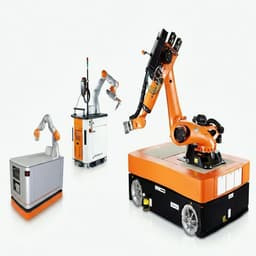
| KUKA KMP 1500P (differential-drive counterexample) | 1.5 t | 1.8 / 1.5 m/s (no load / loaded) | No explicit public slope figure on page | Internal logistics heavy-load transfer | High payload and high speed do not imply holonomic capability; architecture class must be verified directly. | S10 |
| Assumption | Value / formula | Reason |
|---|---|---|
| Traction force model | F_total = (F_roll + F_grade) × shock × transient × safety | Separates physics baseline from duty amplification to avoid hidden multipliers. |
| 4-wheel torque split | T_wheel = F_total × radius / 4 | Four wheel modules share longitudinal traction and vector correction in holonomic layouts. |
| Reference wheel torque envelope | T_ref(Nm) = 0.38 × wheel diameter(mm) | Internal pre-screen heuristic for alias intent triage, not a substitute for supplier thermal curves. |
| Thermal duty index (relative) | duty_hours × transient × shock × (power_kw / 3.2) | Flags high cycle stress before full thermal simulation is available. |
| Holonomic yaw envelope check | omega_max ≈ sqrt(2)v / wheel_center_radius | Approximates square 4-wheel holonomic geometry; smaller wheel-center radius increases rotational demand at the same target speed. |
| Source | Scope | Date | Status |
|---|---|---|---|
| [S1] ISO 3691-4:2023 scope summary (public abstract) | Published scope boundary for driverless industrial truck context and exclusions | published 2023-06, checked 2026-05-13 | Known |
| [S2][S3][S4] ROS2 kinematics and controller docs | Geometry coupling and controller timeout behavior across controller generations | Humble/Kilted docs, checked 2026-05-13 | Known |
| [S5][S6][S7] VDA 5050 official pages and specification document | Version status, protocol scope, and communication-standard boundary | v3.0.0 (March 2026), checked 2026-05-13 | Known |
| [S8][S9] ANSI + OSHA public references | US-side terminology and revision-trace requirements | 2022-2024 publications, checked 2026-05-13 | Partially known |
| [S10][S11][S12][S13] Model-level product pages (KUKA/SEER/DF) | Concrete payload/speed/passability/floor assumptions plus architecture counterexample | checked 2026-05-13 | Partially known |
- [S1] ISO 3691-4:2023 scope summary (public abstract): Used for high-level scope gating only; clause-level environment mapping still requires full-text access.
- [S2][S3][S4] ROS2 kinematics and controller docs: Used for kinematic boundary and fail-safe configuration evidence, not for mechanical sizing.
- [S5][S6][S7] VDA 5050 official pages and specification document: Used to separate interoperability protocol decisions from safety-standard decisions.
- [S8][S9] ANSI + OSHA public references: Terminology linkage is public, but project-specific legal interpretation still needs compliance counsel.
- [S10][S11][S12][S13] Model-level product pages (KUKA/SEER/DF): Useful for directional decision deltas only; no cross-vendor harmonized test protocol is disclosed.
| Architecture | Control complexity | CAPEX | Floor tolerance | Best fit | Main risk |
|---|---|---|---|---|---|
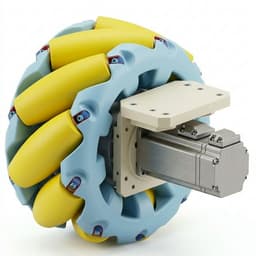
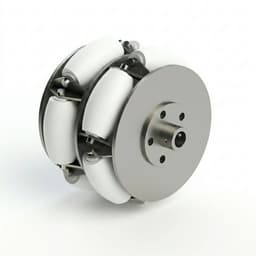
| 4-wheel holonomic drive (omni/mecanum) | Medium to high | $$$ | Low to medium | Tight cells that need lateral correction and rotation in place | Higher slip sensitivity and controller tuning burden |
| 4-wheel skid differential | Medium | $$$ | High load, medium precision | Heavy payload with limited precision requirement | Tire wear and floor marking increase in tight turns |
| Steering axle + drive axle | High | $$$$ | High | Long straight runs and higher travel speed | Packaging and maintenance complexity rises |
| 4-wheel mecanum layout | High | $$$$ | Low to medium | High maneuverability with broader payload range | Efficiency and debris sensitivity penalties |
| Risk | Trigger | Impact |
|---|---|---|
| Traction collapse during dusty shift | High stop-start frequency + rough floor | High |
| Torque saturation and motor overheating | Torque utilization > 95% with long duty hours | High |
| Lateral drift from asymmetric wheel friction | CG offset + contaminated floor + mismatched wheel wear | Medium |
| Procurement mismatch from nominal-only comparison | Vendor selection based only on diameter and peak torque | Medium |
- Mitigation: Reduce command acceleration, increase wheel diameter band, and add traction monitoring.
- Mitigation: Switch gear ratio or larger wheel module, then verify continuous torque at temperature.
- Mitigation: Add periodic calibration, per-wheel current monitoring, and lateral-error alarm thresholds.
- Mitigation: Demand duty-specific load curve, bearing life data, and thermal report in RFQ.
Scenario cases with assumptions and outcomes
Scenario outcomes are generated with the same tool model so decisions remain consistent.
Torque utilization 24.6% · Thermal index 5.1
Move to RFQ with route map, wheel-center load sheet, and requested torque duty cycle.
Torque utilization 33.3% · Thermal index 11.1
Move to RFQ with route map, wheel-center load sheet, and requested torque duty cycle.
Torque utilization 109.8% · Thermal index 27.1
Switch to reinforced module or architecture alternative, then rerun selection with revised assumptions.
Torque utilization 129.0% · Thermal index 32.3
Switch to reinforced module or architecture alternative, then rerun selection with revised assumptions.
FAQ by decision intent
Questions are grouped by route scope, reliability, and procurement actions.
| Tag | Source | Publisher | Version / date | Checked |
|---|---|---|---|---|
| S1 | ISO 3691-4:2023 Industrial trucks - Safety requirements and verification - Part 4 | ISO | Published 2023-06 | Checked 2026-05-13 |
| S2 | ROS2 mobile robot kinematics (omnidirectional mapping, Humble docs) | ros2_control | Humble docs (May 2026) | Checked 2026-05-13 |
| S3 | ROS2 mecanum drive controller user documentation (Humble) | ros2_control | Humble docs (May 2026) | Checked 2026-05-13 |
| S4 | ROS2 omni-wheel drive controller user documentation (Kilted) | ros2_control | Kilted docs | Checked 2026-05-13 |
| S5 | VDA 5050 interface overview and version status | VDA | Version 3.0.0 published March 2026 | Checked 2026-05-13 |
| S6 | VDA 5050 Recommendation PDF | VDA | Version 3.0.0, March 2026 | Checked 2026-05-13 |
| S7 | VDA5050 official GitHub repository (versioning and support notes) | VDA5050 working group | Main branch states Version 3.0.0 | Checked 2026-05-13 |
| S8 | ANSI/ITSDF B56.5-2024 update note | ANSI Blog | Published 2024-01-26 | Checked 2026-05-13 |
| S9 | OSHA Federal Register (references ANSI B56.5-2019 terms) | OSHA | Published 2022-02-16 | Checked 2026-05-13 |
| S10 | KUKA KMP 1500P diff-drive product page | KUKA | Public product page snapshot | Checked 2026-05-13 |
| S11 | SEER SOS-1000 omnidirectional stack product page | SEER Robotics | Public product parameter page | Checked 2026-05-13 |
| S12 | SEER SBA-400EU base robot product page | SEER Robotics | Public product parameter page | Checked 2026-05-13 |
| S13 | DF Automation ZOEI-S omni-directional AMR page | DF Automation | Public product parameter page | Checked 2026-05-13 |
| Data still needed | Status | Impact | Minimum action |
|---|---|---|---|
| Vehicle-level thermal rise and regeneration profile by duty cycle | No reliable public dataset | Public specs do not provide route-specific heat accumulation risk for 4-wheel holonomic layouts. | Run a 2-4 week instrumented pilot and require temperature/current logs before release. |
| Model-level continuous torque curve at operating temperature (not only peak torque) | Pending confirmation | Brochure peak torque does not show sustained omni-vector duty capability for long shifts. | Require torque-vs-speed-vs-temperature curve in RFQ acceptance package. |
| Cross-vendor, same-protocol benchmark for omni/differential comparison | No reliable public dataset | Vendor pages use different test protocols, so direct speed/slope comparisons can be misleading. | Build one internal acceptance protocol and require each shortlisted vendor to rerun against it. |
| Full-text clause mapping for extreme environments and special atmospheres | Pending confirmation | Public summaries do not expose all normative clauses; legal/compliance conclusions can be under-specified. | Procure the full standard text and map each project scenario to a clause-level compliance checklist. |
Final action path
If your output is fit, proceed to RFQ. If borderline or out-of-envelope, move to pilot or custom engineering without route split.
Related engineering resources
Continue with drivetrain architecture checks, wheel-product context, and direct RFQ actions.