AGV Motor Rotation Unit & Drive-Wheel Traction Sizing Tool
Use this AGV motor rotation unit tool to screen BLDC drive-wheel traction demand, then compare module packaging and review the steering, load, and controller data that must come from the selected manufacturer.
Canonical path: /learn/agv-motor-wheel
Published - Last updated
Executive summary for AGV motor, horizontal wheel, and rotation unit decisions
Core conclusions, key numbers, and applicability boundaries in one screen before deeper section review.
Applicable for
- Indoor logistics routes with known floor profile and grade map.
- Teams that can run pilot instrumentation before final lock.
- Programs comparing 24V against 48V with clear TCO criteria.
Not applicable for
- Unmeasured outdoor routes with large traction uncertainty.
- Safety-critical final approval without supplier test evidence.
- Steering-axis sizing, module-load approval, or safety sign-off without manufacturer data.
Key conclusions: evidence, limits, and applicability
Use the source tags to trace each recommendation and its boundary; the calculator’s own fit bands remain internal screening heuristics.
| Conclusion | Applies when | Limit or counter-example | Evidence | Checked |
|---|---|---|---|---|
| Use ISO 3691-4 primarily for driverless truck safety scope and misuse boundaries. | Deployment scoping, hazard review, and route-operating-zone preparation. | Not for power-source requirements; severe conditions (freezer/public road/explosive zones) need extra controls; official page lists a draft successor under development. | S1 | 2026-07-07 |
| Normalize supplier duty terminology to IEC 60034-1:2026 before RFQ comparison. | Comparing continuous/peak claims across motor vendors and controller stacks. | Legacy sheets may still cite IEC 60034-1:2022 (withdrawn on 2026-03-13). | S2, S3 | 2026-04-28 |
| Use IEC 61800-9-2 system-level indicators for efficiency comparisons. | 24V versus 48V architecture screening where controller + motor losses both matter. | Full clause text is paywalled; final compliance interpretation requires purchased standards. | S4 | 2026-04-28 |
| Workplace conditions (surface, ramps, hazardous areas) must be part of operational readiness. | Facilities where AGV routes overlap PIT-style operating constraints. | OSHA citation is U.S.-specific; use local legal framework in other jurisdictions. | S5 | 2026-04-28 |
| Freeze fleet-interface protocol version in RFQ/FAT to reduce integration surprises. | Projects integrating mobile robots and central fleet-control systems. | Public protocol release does not guarantee backward compatibility for your stack. | S6, S7 | 2026-04-28 |
| Keep calculated continuous load inside supplier T_cont and request peak/stall margin evidence before using a 3x target. | General sizing for AGVs before specific vendor testing. | The 3x target is a screening heuristic, not a universal standard; duty cycles deviating from S1 (e.g. S2 or S3) may require custom thermal simulations rather than fixed ratios. | S9 (explicitly uncertain) | 2026-07-07 |
| Do not select brushed DC without a documented brush/commutator inspection plan. | Legacy AGV retrofits or high-uptime lines. | BLDC removes brush wear but still needs bearing-life and thermal validation from supplier data. | S10 | 2026-07-07 |
| The thermal index is not a temperature prediction; verify winding and magnet limits against supplier data and pilot measurements. | Continuous heavy-grade or high stop-start routes. | Magnet temperature class is not a guaranteed operating limit under load; demagnetization margin also depends on the motor magnetic circuit and current. | S11 | 2026-10-14 |
| Migrate legacy 200W 24V DC designs (e.g., Oriental Motor BLV620K30S-1) to current-generation replacement families (e.g., BLV Series R Type) to avoid obsolete-part procurement. | Legacy AGV retrofits and BOM updates for 200W-class drive platforms. | Direct drop-in mechanical, driver, interface, and mounting compatibility must be verified against the current supplier datasheet. | S12, S13 | 2026-10-14 |
| Check IEC 60034-30-1:2025 scope before using its IE classes for an AGV motor; nominal 24V/48V battery modules are not automatically covered. | Evaluating BLDC efficiency claims for AGV battery runtime. | The standard covers single-speed, sinusoidal 50/60Hz motors rated 50–1,000V. A compact drive that cannot be tested separately falls under complete power-drive-system evaluation. | S14 | 2026-10-14 |
| Evaluate drive/controller Safe Torque Off (STO) evidence per IEC 61800-5-2 when the AGV safety architecture relies on controller-level torque prevention. | New AGV/AMR designs with integrated motor drives, E-stop recovery requirements, or safety functions assigned to the drive controller. | STO is not a motor sizing metric and does not replace the full ISO 3691-4 risk assessment; some legacy or low-risk architectures may use other validated torque-removal methods. | S1, S15 | 2026-07-07 |
| Choose horizontal or vertical drive-wheel layouts against the available height and plan-view envelope. | Chassis design phase, deciding between horizontal vs vertical drive module orientation. | Horizontal and vertical layouts trade chassis height against horizontal footprint; verify the selected module drawing, access, and cable path. | S16, S17 | 2026-07-23 |
Rotation-unit sizing boundary and RFQ checklist
The checker estimates traction demand only. A rotation unit also needs module-specific steering, structural, and control checks; those values are not interchangeable across suppliers.
| Check area | Included in this tool | Verify for the selected module |
|---|---|---|
| Traction motor and wheel demand | Pre-screened from vehicle mass, route, wheel, ratio, and selected 24V/48V bus. | Confirm continuous and peak torque, thermal duty, current convention, traction, and cooling against the motor/controller datasheet. |
| Wheel-module load and chassis fit | Not calculated; the traction model splits load evenly across the entered drive-wheel count. | Check rated wheel load, center of gravity, load transfer, mount envelope, floor contact, service access, and cable clearance. |
| Steering axis and rotation range | Not calculated by this traction checker. | Request steering output torque under load, steering speed, permitted angle, continuous-rotation/cable design, encoder, and mechanical stop details. |
| Controller, braking, and safety functions | Not assessed; a fit band is not a safety or compliance result. | Confirm controller interfaces and braking. Validate any STO or other safety function in the project safety architecture. |
VDA 5050 factsheets can describe whether a wheel is driven or steered and record its position and geometry. That vehicle description does not specify steering torque, range, or motor sizing (S7). Request those values from the selected module supplier.
Boundary table: when to trust and when to stop
This boundary layer prevents over-confidence in nominal labels and gives minimum fallback actions.
| Condition | Threshold | Risk if ignored | Minimum action |
|---|---|---|---|
| Motor-current proxy crosses the internal screen | > 80A (review), > 120A (redesign); heuristic only | The estimate may not match the motor or controller current convention. | Compare supplier motor phase/RMS/peak ratings and controller limits on the same basis. |
| Voltage utilization near saturation | > 82% (review), > 92% (redesign) | Back-EMF headroom collapse at speed and torque fade. | Lower Kv, reduce target speed, or evaluate 48V architecture. |
| Thermal load index above sustained envelope | > 8.0 (review), > 12.0 (redesign) | This index cannot predict winding or magnet temperature; excessive heat can cause insulation damage or demagnetization. | Request supplier winding/magnet limits and thermal maps, then validate with representative pilot measurements. |
| Route grade and floor shock combined stress | grade >= 8% with rough floor | Wheel slip and torque spikes beyond nominal datasheet claims. | Pilot on real route and collect slip/current events. |
| Gear ratio too low for payload-speed pair | < 10 in heavy duty profile | Continuous high motor current and low efficiency region operation. | Increase gear ratio or reduce required top speed. |
| Harsh environment with fluid or dust exposure | Cleaning protocols require IP65 or IP69K | Premature bearing failure or electrical short in non-sealed standard indoor motors. | Specify IP65/IP69K motor housing and sealed connectors in the RFQ. |
Scenario examples with assumptions and outcomes
Scenarios reuse the same tool model to keep recommendation logic consistent across cases.
Decision FAQ by intent
FAQ is grouped by route scope, method boundary, and procurement action.
Related AGV electric motors engineering resources
Continue with drivetrain architecture checks, integration references, and direct technical RFQ actions.
- AGV Motor Suppliers Matrix & Sourcing Guide
- AGV motor sizing and RFQ guide
- Forklift AGV drive wheel integration reference
- Differential drive checker for route architecture
- AGV and AMR Adoption in Factories
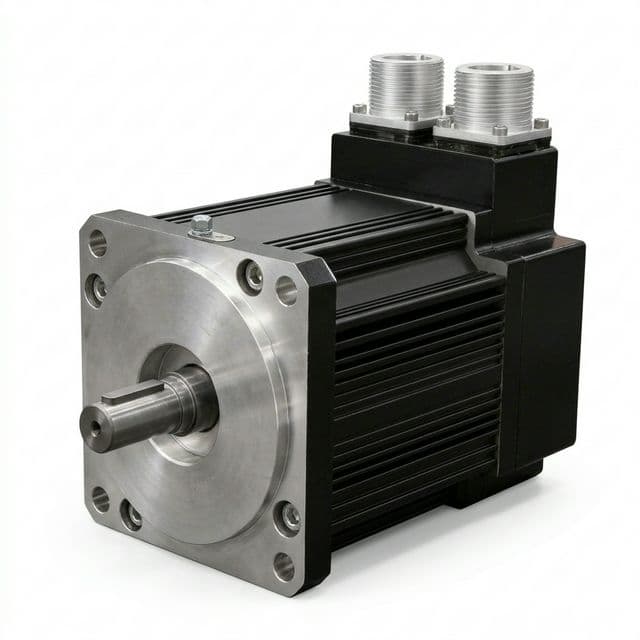
- Commercial Service AGV Drive Wheel Checker
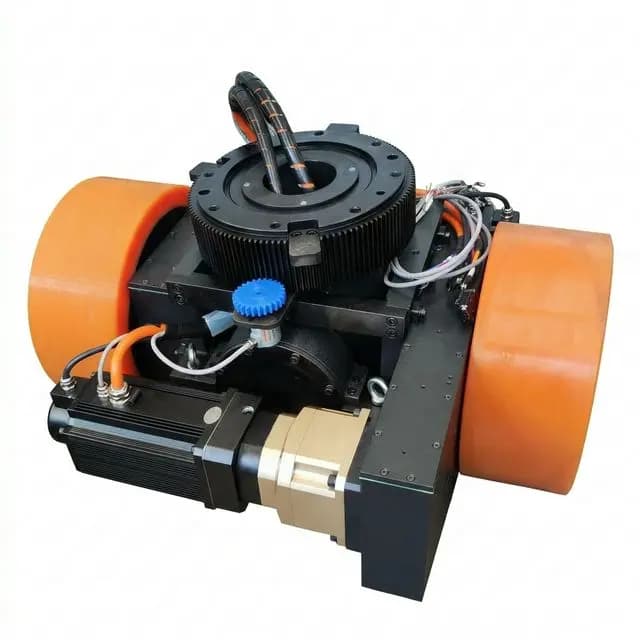
- Request custom AGV motor engineering review
- AGV Forklift Steering Wheel Drive Validation Tool